

Lighting
Why Are My LED Lights Flickering? How to Diagnose It
Flickering LEDs are almost never a faulty globe. Here is how a sparky works out whether it is the dimmer, the fitting, the wiring or your supply.
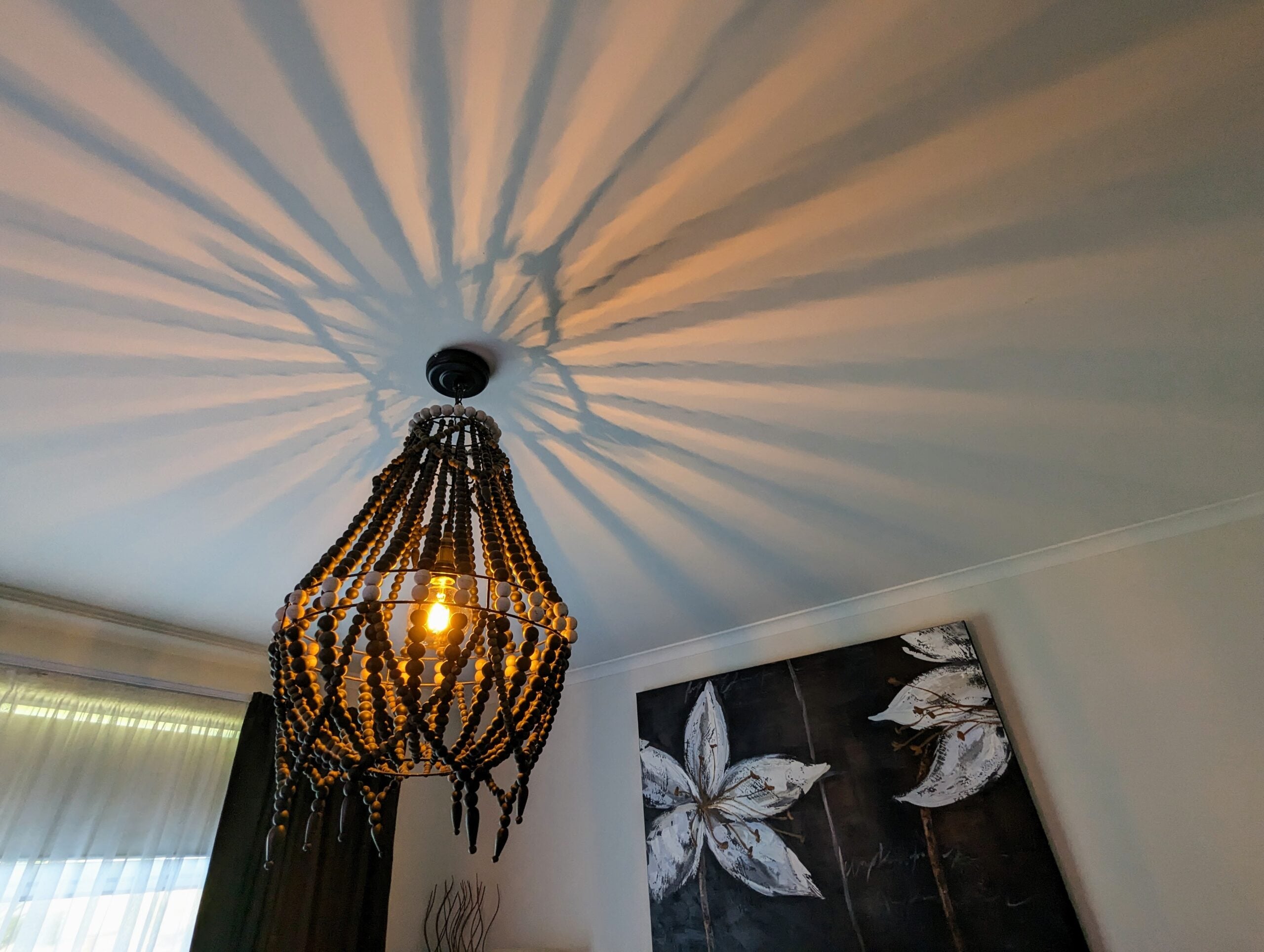
Most LED flicker comes back to a dimmer that was never built for LEDs. Older leading-edge dimmers were designed for incandescent and halogen globes, and they chop the mains waveform in a way a small LED driver cannot smooth out, so you get shimmer, strobing, or a light that will not start until the dial is halfway up. The next most common cause sits in the fitting itself: a cheap or failing driver, or a loose connection at a terminal. Before you buy new globes, run one test. Does the flicker affect a single light, everything on one switch, or the whole house? One fitting points at that fitting or its driver. A whole room points at the dimmer, the switch or the wiring feeding it. The whole house points at your supply or your switchboard, and that one needs a licensed electrician rather than a new globe.
Detail
Narrow it down in five minutes
With LED downlights flickering overhead, nearly all of the useful diagnosis happens from the floor. No ladder, no screwdriver, no switchboard. You are working out how far the fault reaches, and that decides whether you are buying a fitting, changing a dimmer or booking an electrician.
Count what actually flickers
One downlight playing up while its neighbours sit rock steady points at that fitting. A whole room going at once points at the switch, dimmer or circuit. Every light in the house shimmering together sits at the switchboard or the supply.
Take the dimmer out of the picture
Wind the dimmer to full and leave it a few minutes. If the flicker vanishes at the top and only turns up in the bottom third of the travel, the dimmer does not suit the drivers. Same answer if the lights glow faintly when it is switched off.
Note what else is running
If the shimmer lines up with the aircon compressor cutting in, a pressure pump starting, or a big tool in the shed, you are watching a voltage dip, not a lighting fault.
Work out when it started
Flicker that showed up the week the downlights went in is a compatibility or installation problem. Flicker that crept in over two or three years on fittings that were fine is usually a driver wearing out.
Use your ears and the back of your hand
A buzz from the dimmer plate under load is worth noting. A warm switch plate, a buzzing fitting, or any smell of hot plastic is where the home diagnosis stops. Turn that circuit off and ring an electrician.
Detail
Why the dimmer is usually the culprit
Most dimmers sitting in Australian walls today went in before the LED changeover. They are leading-edge dimmers, sometimes sold as TRIAC dimmers, built to run a filament globe that does not much care how ragged the waveform gets. A halogen filament stays hot between cycles and smooths the switching out on its own.
An LED has no filament to do that. Behind every LED lamp is a small driver converting mains AC into the low voltage DC the diodes need. Cut the front off each half cycle, which is what a leading-edge dimmer does, and the driver has to make up the shortfall. Some manage. Plenty do not, and you get flicker, strobing, a lamp that refuses to fire until the dial is halfway, or a sudden jump in brightness partway through the travel.
Trailing-edge dimmers cut the back of the waveform instead and switch far more gently. Most LED drivers are happy with one, which is why a suitable trailing-edge replacement is the first thing to look at when LED lights flicker on a dimmer switch.
The dimmer and the driver still have to suit each other, and reputable manufacturers publish compatibility information for their dimmable LEDs. If your downlights are not marked dimmable, no dimmer will make them behave. They will flicker, buzz, or die early.
Detail
Minimum load: not enough light for the dimmer to hold on to
Dimmers have a minimum load as well as a maximum: the smallest wattage the electronics need to sense and regulate properly. That was never an issue with halogen, where four downlights on one switch might be 200 watts. Six 7 watt LED downlights come to 42 watts, under the minimum on some dimmers.
The symptoms overlap with a compatibility problem: flicker at the low end of the dial, a refusal to strike, a slow pulse, or a faint glow from the downlights when the switch is off. That last one catches people out. The lights are getting the trickle of current the dimmer uses to keep itself alive.
The fix is a dimmer rated down to small LED loads, a load-correction device wired in by an electrician, or in some cases putting more of the circuit back on the one dimmer.
Detail
Failing drivers and cheap fittings
The LED chip itself will usually outlast the house. The driver will not. It is a small power supply with electrolytic capacitors inside, sitting in a ceiling space that gets brutally hot through a Murraylands summer, and bargain fittings have less margin.
A driver on the way out has a pattern. The light flickers now and then, usually when cold or first switched on. Weeks later it flickers every night, then it starts dropping out. Changing the globe does nothing: on most modern downlights the driver and the LED are one sealed unit, so the whole fitting gets swapped.
Quality at purchase time is the whole ballgame, which is why fitting choice matters on a whole-home LED upgrade rather than matching on wattage alone.
Detail
Loose connections and shared neutrals
A terminal that is not done up tight makes and breaks contact instead of holding it. That shows as flicker with no relationship to the dimmer at all. It comes and goes with vibration, a door slamming, wind on the roof, or nothing you can pin down.
A loose or shared neutral has a bigger footprint. Lights on more than one circuit flicker together, or brighten noticeably when a large appliance switches off. Act on that one rather than living with it.
Both faults share a problem: a poor connection carrying current makes heat, and heat in a ceiling or a switchboard is how electrical fires start. Neither is a homeowner job.
Detail
When the whole house flickers
If every light dips at the same moment, the lighting is not the problem. It is reporting one from further upstream.
A short dip when something big starts is normal enough. A pump, aircon compressor or welder pulls a heavy inrush current for a fraction of a second, the voltage sags, the lights blink. On a long run from the pole those dips go deeper.
What is not normal is whole-house flicker with no obvious trigger, flicker that worsens over weeks, or flicker alongside a buzzing switchboard. That points at the switchboard connections, the main neutral, the service cable, or the distributor's side. An electrician can test which side of the meter the fault sits on, and tell you if it belongs to the network before you spend money in the wrong place.
Detail
Mixing brands and batches on one circuit
Downlights that look identical from the floor are not identical inside. Drivers from different makers, or the same model from a different batch, respond to a dimmer differently. On one dimmed circuit that shows up as uneven behaviour rather than a clean fault:
- One or two fittings flicker while the rest of the run holds steady
- The lights reach full brightness at different points on the dial
- Some fittings strike at the bottom of the range while others stay dark
- The colour shifts across the room as you dim, so one end goes warm before the other
Detail
Flicker that started right after an installation
The causes here are a short list, and most come back to something reused or assumed rather than checked. If your LED lights started flickering after installation, the usual suspects are:
- The old leading-edge dimmer was left on the wall when the halogens came out
- Non-dimmable fittings went on a dimmed circuit
- The total load now sits below the dimmer's minimum
- A plug or terminal was not seated fully when the fitting went in
- The new downlights are a different brand or batch to the ones already on that circuit
- The dimmer and the driver do not get on, even though both are LED rated
Detail
Where the do-it-yourself part stops
Looking, listening and noting the pattern is fine. Past that it is licensed work.
Do not go into the ceiling space to investigate downlights. The transformers and drivers up there run hot, the fittings sit in insulation, and it is easy to turn a nuisance flicker into a dead circuit. Turn the circuit off at the switchboard and call an electrician if you see any of this:
- A burning or hot plastic smell, or a scorch mark on a fitting, switch or the switchboard
- A switch plate, dimmer or downlight warm or hot to touch
- Buzzing or crackling from a fitting, a switch or the switchboard
- Flicker together with a safety switch that trips, or with lights browning out
- Flicker across several circuits at once, or anything at the switchboard
Detail
Getting it sorted
A flicker fault is diagnosis work before it is replacement work. Testing the circuit, checking the dimmer against the drivers actually installed, inspecting terminations and measuring the supply under load tells you which cause you have. Swapping globes on a guess is how people end up with three sets of downlights in the shed and the same flicker.
ElectricalPro has worked on homes around Murray Bridge, the Adelaide Hills and the Murraylands since 2003, from Mount Barker and Hahndorf to Mannum and Tailem Bend. Lighting faults, dimmer changes and LED lighting installation and upgrades are day-to-day work.
If your lights are flickering and you want it diagnosed rather than guessed at, call 0438 840 121 or get in touch.
Common Questions
Frequently Asked Questions
Why do my LED lights flicker when dimmed but not at full brightness?
That pattern almost always means the dimmer and the LED drivers do not suit each other. Leading-edge dimmers, the type installed for halogen and incandescent globes, cut the front off each half cycle and leave the driver with too little to work with at low settings. At full brightness there is enough waveform left that the driver copes. It can also mean the load has fallen below the dimmer's minimum. Either way the fix is at the dimmer, not the globe.
Can I just replace the dimmer myself?
No. Changing a dimmer means working on fixed wiring, which in South Australia is licensed electrical work. It is also easy to fit a dimmer that is rated for LEDs but still wrong for the specific drivers you have, and then you are back where you started with a new part on the wall.
Why does one downlight flicker and the rest are fine?
Flicker confined to one fitting is nearly always that fitting. Usually the driver is going, and on a sealed integrated downlight that means replacing the fitting. The other possibility is a connection into that light that is not tight, worth checking before assuming the fitting is dead, because a loose connection will keep causing trouble after the new light goes in.
My LED lights glow faintly when they are switched off. Is that dangerous?
Not usually, but it is telling you something. A faint glow with the switch off generally means a small current is still reaching the driver, either because the dimmer draws a trickle to power itself or because of induced voltage in a shared cable run. It is a compatibility issue and it can be fixed. If it comes with heat, buzzing or a smell, treat it as urgent instead.
The lights dip every time the aircon starts. Is something wrong?
A brief dip when a compressor, pump or other motor starts is the motor pulling a large inrush current for a moment. Occasional and momentary is expected, particularly on a long supply run out of town. If the dip is deep, lasts longer than a blink, happens with small appliances, or is getting worse, have the supply and the switchboard checked.
Will replacing my LED globes with a better brand fix the flicker?
Sometimes, if the fault is a failing driver in a cheap fitting. It will do nothing if the cause is the dimmer, the minimum load, a loose connection or the supply, and that covers a lot of flicker complaints. Work out how far the flicker reaches first, because that tells you whether you are buying a fitting or booking a fault find.
Need a Licensed Electrician?
Tell us what is happening and we will give you a straight answer and a fixed price.