

Our Services
Solar Panel Cleaning in Murray Bridge & Adelaide Hills
Professional solar panel cleaning across the Adelaide Hills and Murraylands.
Why Choose Us
Solar Panel Cleaning Features
Here's what sets our service apart.
- Deionised water so panels dry without a mineral film
- Soft-bristle equipment that will not scratch the anti-reflective coating
- Isolator, connection and mounting hardware checked while we are up there
- Residential and commercial arrays, including large farm and shed systems
- Output compared before and after so you can see what the clean recovered
- Any brand of panel, whoever installed it
- Licensed electrical contractor, so faults found can be repaired not just reported
- Roof access handled by people who work on roofs every week
About This Service
Solar Panel Cleaning
Panels are the only part of a solar system that has to stay clean to work, and they are the part nobody can see. A layer of dust does not look like much from the ground. It shows up on the bill.
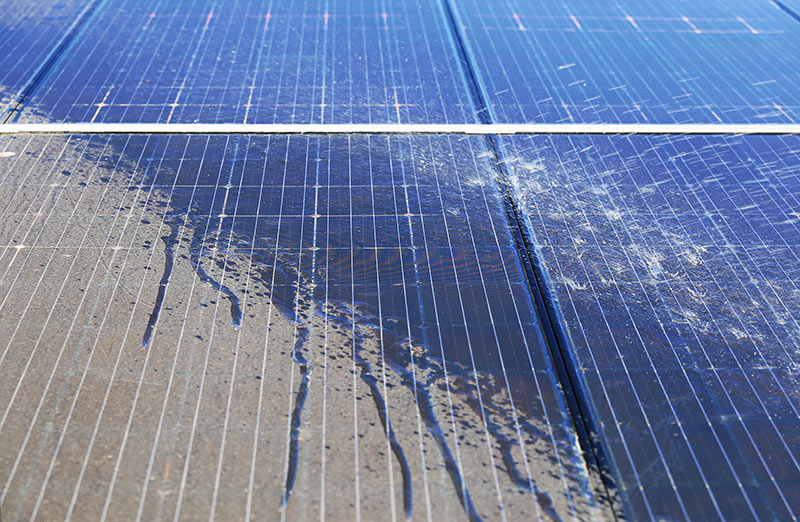
Out here it builds up faster than it does in the city. Paddock dust carries a long way in summer, harvest throws a lot of it into the air at once, and any property near stock or trees collects bird droppings on the glass as well. Droppings are the worse of the two, because a single spot sits on one cell and can drag down the whole string it belongs to rather than just the patch it covers.
Twice is better on rural properties, near unsealed roads, or anywhere the roof collects bird traffic.
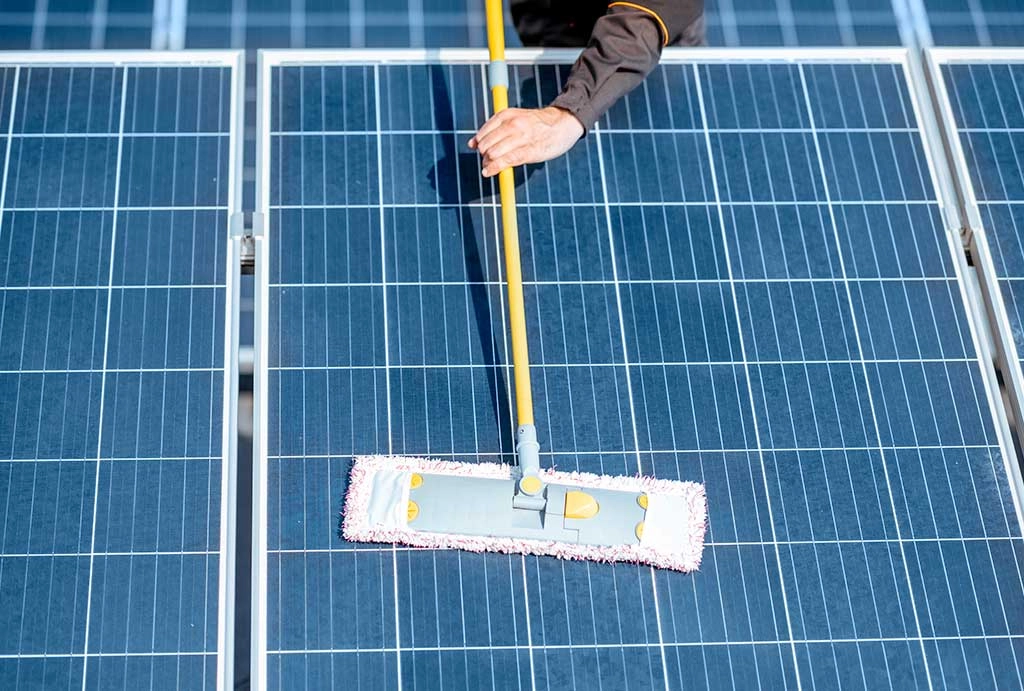
We clean with deionised water and soft-bristle equipment. Deionised water matters because it dries without leaving the mineral film that ordinary tap water leaves behind, which is what turns a clean panel back into a dull one within a fortnight. Soft bristles matter because the anti-reflective coating on the front of a panel is easy to scratch, and a scratched panel loses output permanently.
While the panels are being cleaned we look at the parts most people never inspect: the condition of the rooftop isolator, the DC connections, the mounting hardware and the frames. Those are the components that fail with age and weather, and a cleaning visit is the natural time to catch them. If something needs attention we tell you, and because we are a licensed electrical contractor, licence PGE 160190, we can do that work rather than refer it on.
Once a year suits most homes. Twice is better on rural properties, near unsealed roads, or anywhere the roof collects bird traffic.
What We Offer
Solar Panel Cleaning at a Glance
How It Works
Our Process
From initial contact to completed job, here's what to expect.
Check What It Is Producing
We look at the system's current output before touching it, so there is a number to compare against afterwards.
Clean With Deionised Water
Soft-bristle equipment and deionised water, which dries without leaving the mineral film that ordinary water leaves behind.
Inspect While We Are Up There
Isolator condition, DC connections, mounting hardware and frames. These are the parts that fail with age and nobody inspects between services.
Show You The Difference
We compare output after the clean against the reading we took first, and tell you what we found on the roof.
Common Questions
Frequently Asked Questions
How often should panels be cleaned?
Once a year works for most homes. Twice a year is better if you are on a rural block, near an unsealed road, under trees, or anywhere birds gather on the roof. Properties near cropping country often want a clean after harvest, because that is when the most dust goes up at once.
Can I just do it myself with the hose?
You can wash panels yourself, and plenty of people do. Two things are worth knowing before you climb up. Tap water leaves a mineral film as it dries, so panels often look worse a fortnight later than they did before. And most domestic solar is on a pitched roof, where a wet surface and a hose is how people get hurt. If you are going to do it yourself, do it from the ground with an extendable brush and never on a hot day, because cold water on hot glass can crack a panel.
How much output does a dirty array actually lose?
It depends entirely on what is on the glass and how long it has been there. Even dust across the whole array costs less than people expect. Concentrated shading is the real problem: bird droppings or lichen on one cell can pull down the output of every panel wired in that string. The honest answer is that we measure your system before and after so you see your own numbers rather than an industry average.
Do you clean commercial and farm systems?
Yes. Larger arrays on sheds, dairies and farm buildings are some of the dirtiest systems in the region, and they are usually the ones where lost output costs the most, because the system was sized to cover a real load.
Local Knowledge
Solar Panel Cleaning in Murray Bridge & Adelaide Hills
Dust is the defining condition for solar in this region. The Murraylands sit in open cropping country where a windy week in summer puts a visible layer on everything, and harvest concentrates it. The Adelaide Hills trade dust for trees, which means leaf litter, sap and more bird traffic across the glass. Both are harder on panels than a coastal suburb, and both mean the interval between cleans that works in Adelaide is usually too long out here. Systems on rural blocks near unsealed roads collect the most of all, because every passing vehicle lifts dust that settles on whatever is nearby.
Brands We Work With
Common Issues We Fix
- A visible layer of dust across the whole array after a dry summer
- Bird droppings concentrated on a few cells, dragging down an entire string
- Harvest residue on systems near cropping paddocks
- Leaf litter and sap on Adelaide Hills properties under tree cover
- Mineral film left behind by a previous wash with tap water
- Lichen or moss on the lower edge of panels on shaded roofs
- Output that has drifted down so gradually the owner never noticed
- Panels never cleaned since the day they were installed
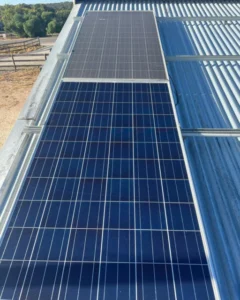
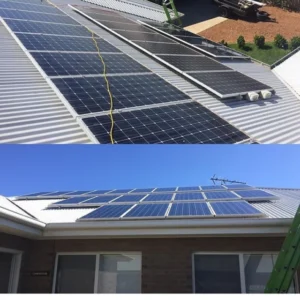
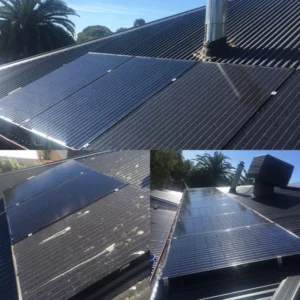
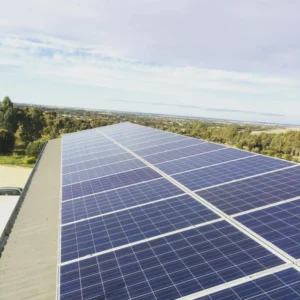
Recent solar panel cleaning work
Straight from the van. These are jobs we have actually finished, posted as they were done.
Explore
Our Solar & Battery Services
The rest of what we do with solar across Murray Bridge and the Adelaide Hills.
Ready to Get Started?
Tell us about your job and we'll come back with a clear, no-obligation quote.
Our Other Services
Explore the full range of electrical services we offer for homes and businesses.
Emergency Electrical
Urgent electrical repairs when you need them most, Monday to Friday, 8am to 5pm.
Learn moreSolar
Expert solar panel installation, repair, upgrades and cleaning for maximum energy efficiency.
Learn moreBattery Storage
Home battery installation with blackout protection. Store your solar energy and slash your power bills.
Learn moreSolar Repairs
Diagnosis, repair and servicing for solar systems that have stopped performing.
Learn moreAir Conditioning
Professional split system and ducted air conditioning installation and servicing.
Learn moreLighting
Interior and exterior lighting design, installation and smart lighting upgrades.
Learn moreSafety Switches
Safety switch installation, switchboard upgrades and electrical safety testing.
Learn moreData & Communications
Structured data cabling, TV antenna installation, CCTV and network setup.
Learn moreSmoke Detectors
Hardwired smoke alarm installation, testing and compliance for homes and rentals.
Learn moreEV Chargers
Home and commercial electric vehicle charger installation by licensed electricians.
Learn more