

Solar
Solar Panel Repairs in the Murraylands and Adelaide Hills: Why Your System Stopped Producing
How to work out why your solar has dropped off, what you can safely check yourself, and what needs a licensed hand on the roof.
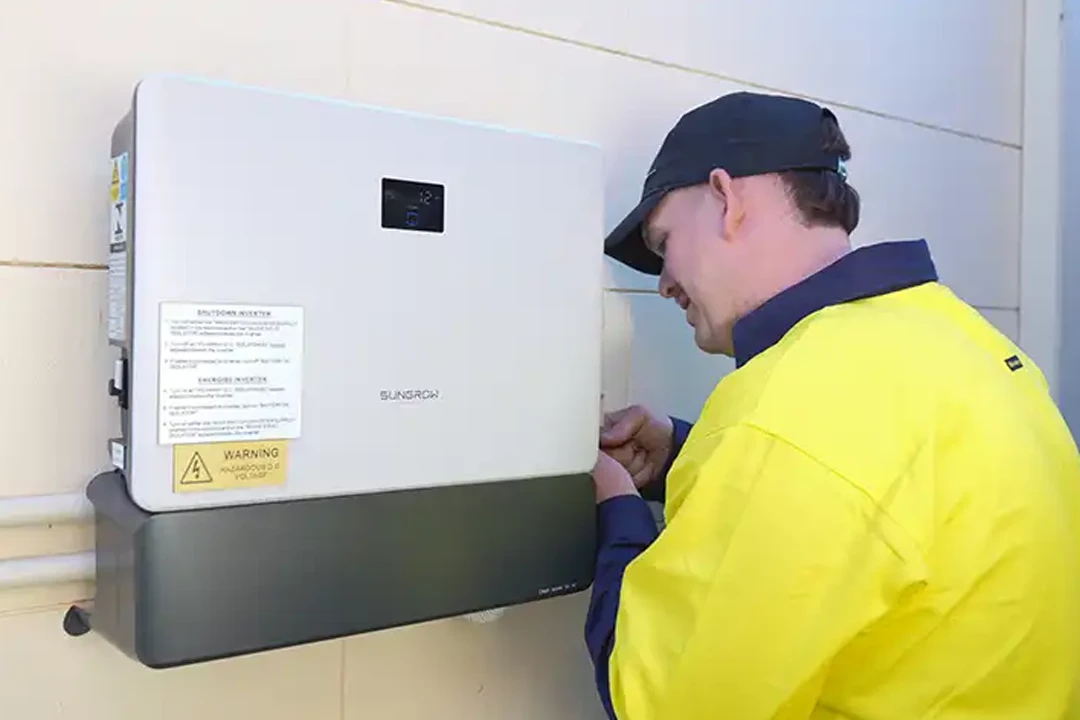
If your solar system has stopped producing, the cause is usually one of three things: the inverter has shut down or gone into a fault state, a DC isolator has failed, or the panels are soiled, shaded or damaged. Start at the inverter. A blank screen or a red light means it has stopped converting, and nothing is reaching your switchboard. If the inverter looks normal but your power bill has crept up, open your monitoring app and compare this month against the same month last year. Small variations come down to weather, season and a dusty array. An unexplained drop of more than about 20 per cent, a sudden fall to zero, or a system that starts well in the morning and cuts out at midday all point to a hardware fault. Those need testing by a licensed electrician, not guesswork from the ground.
Detail
First check: is your system actually underperforming?
Solar output moves around, so one low day tells you nothing. The comparison that counts is the same month a year apart. A few per cent lost each year is ordinary degradation. A step change is not, and neither is a system that runs well early then drops out at midday.
Read the inverter display
Note the status light, any code and today's kWh, and photograph the screen. If it is dead, check the solar breaker.
Compare year on year
Compare monthly totals against the same month last year, not single days. Roughly 20 per cent down with no explanation means something changed.
Check the isolators
Confirm the AC isolator, DC isolator and switchboard breaker are on. Ground level switches only, never the roof.
Look for new shade and dirt
Check from the ground mid morning and mid afternoon. Trees grow and carports go up. Heavy dust and droppings cost output too.
Detail
Reading your inverter: what the lights and codes mean
Fronius, SMA, Sungrow, Goodwe, Enphase, SolarEdge, ABB, Huawei, Growatt and Delta all use their own code sets, and the same number means different things across brands. Write down the exact code and wording before you ring anyone. Most fall into a few families.
- Grid voltage or frequency out of range. The inverter is doing its job. Repeated midday dropouts are a network problem.
- Insulation or isolation resistance fault. Moisture or damage in the DC wiring, connectors or panels.
- Earth fault or residual current. A leakage path on the DC side, needing testing before the system goes back on.
- Over temperature or derating. Common on west facing walls, in closed garages, and where vents fill with dust.
- Arc fault detected. The inverter has seen an arcing connection. Leave the system switched off.
- No display and no lights. Usually a tripped AC breaker, a failed isolator or a dead inverter.
Detail
What you should never do yourself
A rooftop array is a live DC source whenever there is light on it. There is no off switch at the panel, it is dangerous even at low sun angles, and a domestic string commonly runs at several hundred volts. DC arcs do not self extinguish the way AC ones do. So do not go on the roof, do not open the inverter, do not unplug MC4 connectors, and do not hose panels or isolators. If you see melted plastic or scorching, switch off the AC breaker and ring an electrician.
Detail
The most common solar faults we see on SA systems
Around Murray Bridge, Mount Barker, Strathalbyn and Mannum, a short list covers most of what we find.
- Failed rooftop DC isolators, by far the most frequent cause of a dead system.
- Water in conduit, junction boxes or enclosures after a wet winter.
- MC4 connectors mated across brands or crimped poorly, cooking themselves at the joint.
- Soiling from harvest dust, unsealed roads and birds, worst on shallow roofs rain never rinses clean.
- One string or MPPT input down, so the system looks healthy while making half what it should.
Detail
DC isolators: the fault that shuts down more SA systems than anything else
Australian rules required a DC isolator on the roof for years, in a plastic enclosure sitting in full sun and weather. Those enclosures degrade under UV, the seals harden and water reaches the contacts, then corrosion and tracking follow. There have been several recalls in this category. The standard has since changed and a rooftop isolator is no longer mandatory on new installs, but every older system still has one, and it is the first place we look when a system stops dead.
Detail
Inverter failure: lifespan, warranty and repair versus replace
Panels outlast inverters. Most panels carry a 25 year performance warranty, while string inverters are generally warranted on a 5 to 10 year horizon, so one dying past ten years is a normal life. Out of warranty, board level repair is rarely sensible on a small residential unit, because the failed parts sit alongside others of the same age. Microinverters and optimisers differ, since one device can be swapped on its own.
We cover that side on our solar inverter repairs and maintenance page. If the inverter is being replaced anyway, ask whether a hybrid unit makes sense so battery storage can be added later without changing hardware twice.
Detail
Panel faults: microcracks, hot spots, delamination and failed optimisers
Panels fail less often than inverters, and the failures are harder to see. Microcracks are hairline fractures in the cells, caused by hail, footfall or rough handling. A cracked cell can work for years, then fade as the crack opens with thermal cycling.
A hot spot forms when one shaded or cracked cell dissipates what the rest of the string pushes through it, scorching the backsheet or killing the bypass diode. Delamination shows as cloudy patches and lets moisture in. Potential induced degradation leaks current through the glass under voltage stress. None of it announces itself, which is why the year on year comparison matters.
Detail
What a solar health check involves
A proper service goes well past a look at the inverter screen.
- Every panel checked for cracking, delamination, backsheet damage and soiling.
- Racking, clamps and roof penetrations checked for movement, corrosion and leaks.
- Isolator, conduit and cabling inspected for UV damage and water ingress.
- String voltage and current tested against expected values, plus insulation resistance.
- Inverter vents, fans, mounting, firmware, settings and stored fault history.
- The AC side checked at the switchboard, then a year on year output comparison.
- A clear explanation of what was found, and a fixed price quote for any repairs before work starts.
Detail
When an older system is worth repairing and when it is worth replacing
Size matters more than age. A 1.5 kW or 2 kW array from the early rebate years is small by current standards, and once it needs an inverter, replacing the lot usually beats repairing it. A 5 kW or 6.6 kW system from the last decade is another matter: panels and racking are likely fine, and a new inverter puts it back to work for a fraction of a new install. Isolator and connector faults, and a dead panel, are repairs at any age.
Two things to check first. A legacy premium feed in tariff can end if you change or expand the system, and small scale technology certificates only apply where a CEC accredited installer signs off the design. Ask for both quotes on the same visit. See solar services, or get in touch to book an inspection.
Detail
Keeping the warranty intact: why the repairer must be CEC accredited
Solar sits under two sets of rules. All of it is electrical work, so it needs a licensed electrician. Grid connected design and installation also carries Clean Energy Council accreditation, and manufacturer warranties assume the work is done by accredited people to the current standards. A repair by an unaccredited handyman, or a panel frame drilled for a mesh fixing, gives a manufacturer grounds to decline a claim. ElectricalPro has been doing electrical and solar work around Murray Bridge and the Adelaide Hills since 2003.
Common Questions
Frequently Asked Questions
Why did my solar stop working after a storm?
Two things happen. Water gets into rooftop isolators and junction boxes, which shows up as an insulation resistance fault. Separately, a grid outage or voltage swing makes the inverter disconnect. Most restart themselves. If yours will not, stop resetting it and get it tested.
Can one faulty panel stop the whole system?
It can. Panels in a string are wired in series, so a failed panel, bypass diode or burnt connector pulls the whole string down. With optimisers or microinverters only that panel drops out, which is why it goes unnoticed without panel level monitoring.
How long should a solar inverter last?
String inverters are generally warranted around the 5 to 10 year mark, with extended cover sold by many brands. Panels usually carry a 25 year performance warranty, so past ten years an inverter failure is normal while the panels are still good.
Does cleaning solar panels actually make a difference?
Yes, where they are genuinely dirty. Dust, droppings and lichen cut the light reaching the cells, and it is worse on low pitched roofs and near unsealed roads or cropping paddocks. It will not fix a system that halved overnight.
Is it worth repairing a twelve year old solar system?
Often yes, if it is 5 kW or larger and the panels test well, because a new inverter costs far less than a new system. On the small early rebate arrays, replacement makes more sense. An inspection will tell you which you have.
Do I need the original installer to repair my system?
No. If they are still trading and the system is inside its installation warranty, start there. Many retailers from the boom years have gone, and any CEC accredited installer can service and repair the system. Manufacturer warranties stay with the product.
Need a Licensed Electrician?
Tell us what is happening and we will give you a straight answer and a fixed price.