

Safety
When Does Your Switchboard Need Upgrading?
Your switchboard is the nerve centre of your home's electrical system. If it is outdated, it is a genuine safety hazard. Here is how to tell if yours needs replacing, and what the process involves.
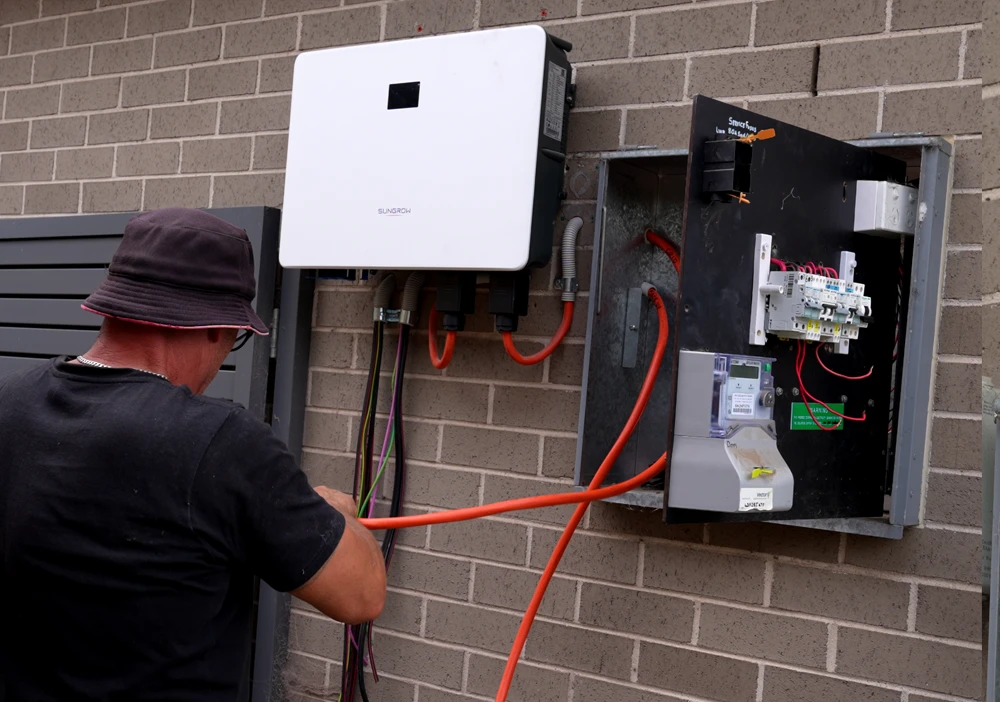
Warning Signs
6 Signs Your Switchboard Needs Upgrading
Many Murray Bridge and Adelaide Hills homes were built in the 1960s through 1980s and still have their original switchboards. While these boards may have "worked fine" for decades, they were designed for a time when the average home drew a fraction of the electrical load we use today. Here are the warning signs that yours is overdue for an upgrade.
If you notice a burning smell, scorch marks, or buzzing from your switchboard, treat it as an emergency. Turn off the main switch and call ElectricalPro on 0438 840 121 for emergency electrical service.
Safety First
Why Outdated Switchboards Are a Real Danger
An old switchboard is one of the leading causes of electrical fires in Australian homes. The key dangers include:
- No RCD protection
- Without safety switches, a fault in any appliance or wiring can send lethal current through a person's body for seconds or longer. RCDs cut power in 30 milliseconds, fast enough to prevent fatal electrocution in most scenarios. The absence of RCDs is the single biggest safety issue we see in older <a href="/locations/murray-bridge/">Murray Bridge</a> homes.
- Asbestos backing boards
- Switchboards manufactured before the mid-1980s commonly used asbestos cement backing panels. These are safe when undisturbed, but any work on the board, or deterioration over time, can release fibres. A switchboard upgrade replaces the entire enclosure with a modern, safe unit.
- Corroded connections
- After 30-40 years, bus bars and terminal connections corrode. Corrosion increases resistance, which generates heat, which accelerates corrosion. It is a dangerous feedback loop that can lead to arcing and fire.
- Inadequate capacity
- A 1970s home might have had a 40-amp main switch and six circuits. Today's homes routinely need 63-80 amps across 16-24 circuits. Running modern loads through undersized wiring and overloaded circuits creates persistent overheating.
Regulations
SA Switchboard Standards and Requirements
South Australian electrical regulations (based on AS/NZS 3000, the Wiring Rules) set clear standards for switchboard safety. Here is what applies:
- All new installations and major alterations must include RCDs (safety switches) on all final sub-circuits, both power and lighting
- Circuit breakers must replace rewirable fuses on any circuit that is modified or extended
- Switchboards must be accessible, with a minimum clearance of 600mm in front and adequate ventilation
- A main switch capable of disconnecting all active conductors must be fitted
- Switchboard enclosures must meet current IP (ingress protection) ratings for their installed location, indoor or outdoor
- When solar is installed, the switchboard must accommodate the solar supply main switch, and existing protection must meet current standards
In practice, this means that adding solar panels, installing a new battery system, or wiring a new air conditioning circuit to an old switchboard often triggers a requirement to bring the entire board up to current standards. It is better to do this proactively than be forced into it during another project.
The Process
What Does a Switchboard Upgrade Involve?
A switchboard upgrade is typically a one-day job for a licensed electrician. Here is what the process looks like:
Assessment and Quote
We inspect your existing switchboard, assess the number of circuits needed, check your incoming supply capacity with SA Power Networks, and provide a fixed-price quote. If asbestos is present, we arrange licensed removal.
Power Disconnection
On the day of the upgrade, we coordinate a temporary power disconnection with SA Power Networks. For most residential jobs, power is off for 4-6 hours. We schedule this to minimise disruption.
Removal and Installation
The old switchboard is removed and the new enclosure is mounted. All circuits are transferred to new circuit breakers, RCDs are installed on all circuits, and the wiring is tested and labelled. We install a board with spare capacity for future additions.
Testing and Certification
Every circuit is tested for insulation resistance, earth continuity, polarity, and RCD trip time. You receive a Certificate of Compliance (COC) and we lodge the paperwork with the Office of the Technical Regulator (OTR) as required.
Investment
What Decides the Cost of a Switchboard Upgrade
No two switchboards are the same, so a published price range tells you very little about what your own board will cost. What it does tell you is that the spread is wide, and that a quote given over the phone before anyone has opened the board is a guess. These are the things that actually move the number.
| What Drives the Cost | Why It Changes the Job |
|---|---|
| Number of circuits | Every circuit needs its own breaker and its own RCD protection, and each one has to be identified, transferred and tested. A board with twenty circuits is a longer job than one with eight. |
| Asbestos in the old board | Older enclosures and backing boards can contain asbestos. If they do, removal is licensed work with its own procedure and its own cost, and it has to happen before the new board goes on. |
| Condition of the existing wiring | If the wiring coming into the board is brittle, undersized or has been extended over the years, that has to be made good rather than reconnected as found. |
| Whether the supply changes | Going from single-phase to three-phase means an SA Power Networks application, a new supply cable and a different board. That is a much bigger job than a board swap. |
| Enclosure size and spare capacity | Fitting a board with room for a future solar system, EV charger or air conditioner costs a little more now and saves a second upgrade later. |
| Meter and metering position | If the meter has to be moved or replaced, your retailer and the metering provider get involved, and that is scheduled separately from our work. |
Reading a Quote
What a Proper Switchboard Quote Should Itemise
- The board itself: make, number of poles, and how many spare ways are left when the job is finished
- RCD protection listed circuit by circuit, not as a single line item
- Whether asbestos testing and removal is included, excluded, or provisional
- Any make-good on incoming or existing wiring found to be unserviceable
- Testing, labelling and the Certificate of Compliance, which are not optional extras
- Whether an SA Power Networks application or a metering change is part of the price or additional
We quote after an inspection, not over the phone. Every switchboard is different, and the only honest way to price one is to open it and look. Call 0438 840 121 for a free assessment.
Triggers
When Is a Switchboard Upgrade Required?
Beyond the warning signs above, there are several situations where a switchboard upgrade becomes necessary or strongly recommended:
If any of these situations apply to you, get in touch with our team. We handle switchboard upgrades across Murray Bridge, Mount Barker, and the wider Adelaide Hills region.
FAQ
Switchboard Upgrade Questions Answered
How long does a switchboard upgrade take?
Most residential switchboard upgrades are completed in a single day: typically 4 to 6 hours of work, plus the time for SA Power Networks to disconnect and reconnect supply. We schedule the work to minimise time without power and will let you know the expected timeline before we start.
Will I need to be home during the upgrade?
We need access to the switchboard and ideally someone available to confirm which circuits serve which areas of the house. You do not need to be present for the entire job, but being available at the start and end is helpful. Power will be off for several hours, so plan accordingly for fridges, internet, and work-from-home setups.
Does my switchboard have asbestos?
If your switchboard was installed before the mid-1980s, there is a reasonable chance the backing board contains asbestos cement. We can identify this during our assessment. If asbestos is present, a licensed asbestos removalist handles the backing board before we install the new switchboard. This adds to the cost but is non-negotiable for safety.
Can I just add safety switches to my old switchboard?
Sometimes, yes. If the existing board has space and is in reasonable condition, adding RCDs without a full upgrade can be a cost-effective safety improvement. However, if the board uses ceramic fuses, has corroded components, or lacks circuit breakers, retrofitting RCDs alone is not sufficient and a full upgrade is recommended. We can assess which approach is right for your situation.
Do I need council approval for a switchboard upgrade?
No council approval or building permit is needed for a like-for-like switchboard replacement. However, the work must be carried out by a licensed electrician and a Certificate of Compliance (COC) is lodged with the SA Office of the Technical Regulator. If the upgrade involves a supply increase (e.g., single to three-phase), SA Power Networks approval is required, and we handle this application on your behalf.
Is a switchboard upgrade worth it for an older investment property?
Strongly recommended. As a landlord, you have a duty of care to provide safe electrical installations. An old switchboard without RCDs puts tenants at risk, exposes you to liability, and may affect your insurance coverage. A switchboard upgrade is one of the best safety investments you can make for a rental property. It also makes the property more attractive to tenants and property managers.
Need a Switchboard Assessment?
Our licensed electricians provide free on-site switchboard inspections and fixed-price quotes across Murray Bridge and Adelaide Hills.