

Safety
Why Does My Safety Switch Keep Tripping? A Murray Bridge Electrician Explains
A tripping safety switch is usually not a faulty one. Here is how to work out what it has found.
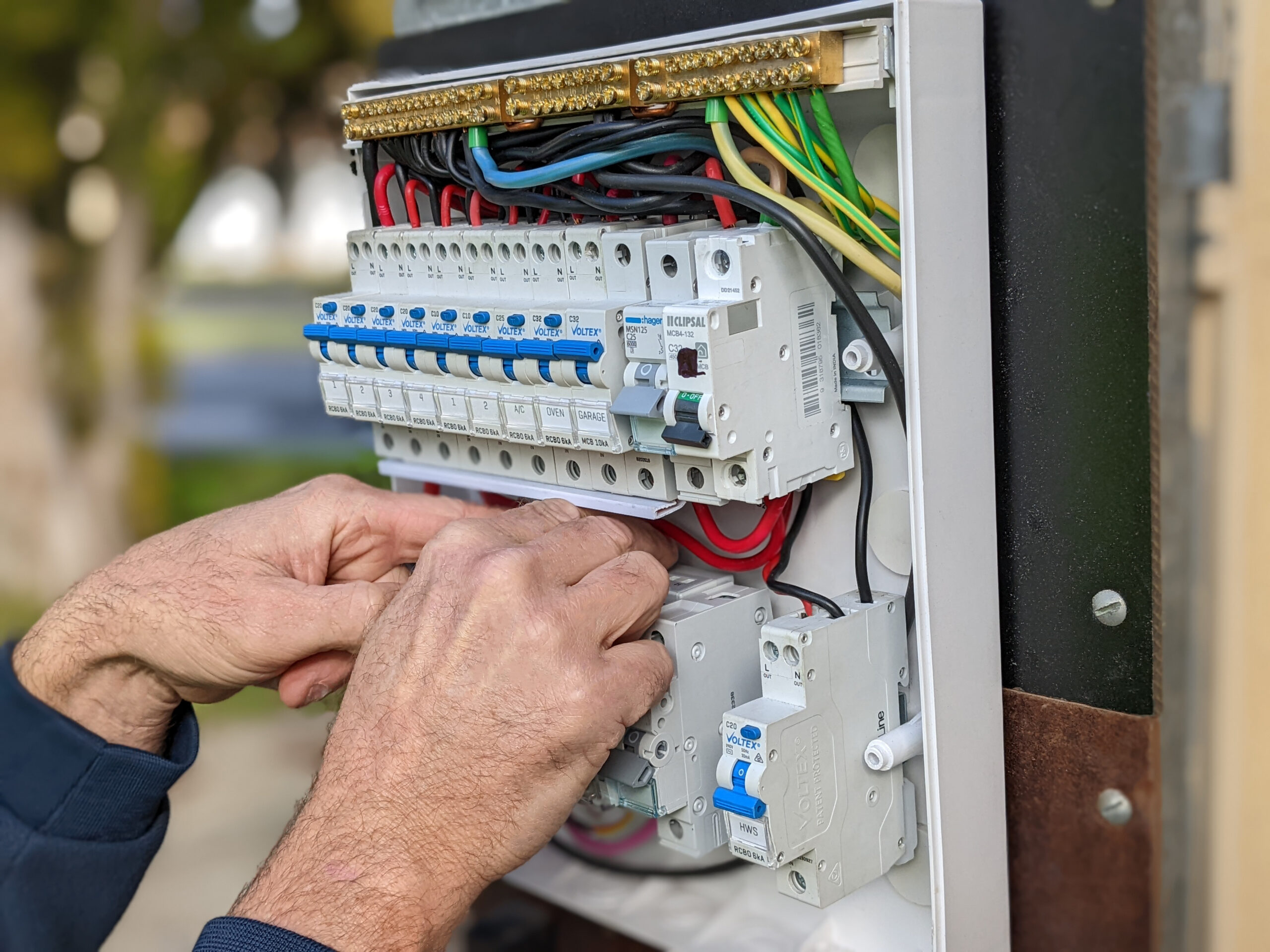
A safety switch trips because it has detected electricity leaking to earth. It compares the current flowing out along the active wire with the current coming back along the neutral, and if even a small amount goes missing (about 30 milliamps on a standard domestic RCD) it cuts the circuit in a fraction of a second. That missing current is going somewhere it should not: through a damaged appliance, through damp insulation, or through a person. The cause is nearly always one of three things. A faulty appliance, a wet or damaged circuit, or a safety switch that is worn out. To work out which, unplug everything on the affected circuit, reset the switch, then reintroduce appliances one at a time. If it holds with nothing plugged in, the fault is in an appliance. If it trips with everything unplugged, the fault is in your fixed wiring and needs a licensed electrician.
Detail
What a safety switch does, and how it differs from a circuit breaker
A safety switch is an RCD, short for residual current device. It protects people. Thirty milliamps is the standard rating for domestic safety switches in Australia, well below the level that would seriously hurt anyone.
A circuit breaker does a different job. It protects the cable in your walls from overload, and it does nothing for a person, because the current passing through someone being shocked is far too small to overload a cable. On your board, the safety switch is the one with a small TEST button. Current wiring rules (AS/NZS 3000) require RCD protection on new domestic subcircuits, but most older homes have a single RCD covering half the house, which is why one trip kills several circuits.
Detail
The 7 most common reasons a safety switch trips
Work through these in order. The first two cause most of the callouts we attend.
- A faulty appliance. Heating elements are the worst offenders. When the sheath in a kettle, oven or hot water element breaks down, current finds a path to earth.
- Water getting in. Outdoor power points, garden lights, sheds and pumps leak once moisture gets past a seal. Tripping often starts the morning after rain.
- Damaged cable insulation. A screw or nail through a wall, rodents in the roof, or old wiring gone brittle with age.
- Accumulated standing leakage. Modern electronics each leak a tiny amount to earth by design. Enough chargers and LED drivers on one circuit and the total reaches the threshold.
- A shared neutral. If two circuits share a neutral, the return current never matches what went out. It trips as soon as both are loaded, and unplugging things will never fix it.
- A worn out safety switch. RCDs are mechanical and they age. An old one turns over-sensitive, or seizes and fails to trip at all.
- A genuine wiring fault. A failed connection, a burnt terminal, or water in the switchboard.
Detail
How to find the faulty circuit yourself: the half-split method
You can do this safely. It only involves switches you are meant to operate. Never remove the switchboard cover.
Note what was running when it tripped
Kettle, washing machine, air conditioner, a storm outside. The pattern is often the answer.
Turn every circuit breaker off, then reset the safety switch
With nothing connected it should reset and hold. If it will not, stop. That is a board or RCD fault, and it is electrician work.
Bring the circuits back on one at a time
One breaker, wait, then the next. When the switch trips you have found the circuit. Leave it off and restore the rest.
Unplug everything on that circuit, then reconnect one item at a time
Include the shed, outdoor lights and anything on a timer. Leave a few minutes between each and actually run it. A failing element only leaks once it heats up, so a kettle plugged in but switched off proves nothing.
Check the fixed loads too
Ovens, hot water, air conditioning and pool pumps do not unplug. Switching their breaker or isolator off one by one does the same job.
Write down the result
Which circuit, which appliance, how long it took, what the weather was doing. That alone shortens a callout.
Detail
Nuisance tripping in older SA homes
Plenty of housing around Murray Bridge, Strathalbyn and the older parts of the Hills was wired long before RCDs were compulsory. Retrofitted safety switches usually went in at the board, covering several existing circuits at once. If those circuits share a neutral, once common practice, the RCD sees an imbalance that has nothing to do with an appliance. Add cable gone brittle with age and the switch reports leakage that was already there. The fix is separating the circuits properly, usually as part of a switchboard upgrade.
Detail
Why hot water systems, ovens and pool pumps are the usual suspects
Anything with a heating element in or near water is a candidate. In an electric storage hot water service the element sits in the tank, so when the sheath perforates, current goes to earth through the water. Classic symptom: the switch trips in the small hours, when the off-peak tariff turns the element on. Ovens fail the same way, often only after twenty minutes once the element has expanded. Pool and bore pumps sit out in the weather until moisture reaches the winding.
Detail
Water ingress after a storm
Every winter the same pattern turns up across Mount Barker, Hahndorf and Lobethal. A front comes through and the next morning safety switches will not stay on. Wind-driven rain gets past the seal on an outdoor power point, fills a garden light, or drips onto a roof junction. These faults dry out, so the circuit can test clean by the time an electrician arrives. Say so when you book if the tripping follows the weather.
Detail
When it is a warning of a real fault, not a nuisance trip
There is a line between fault finding and taking a risk. Stop and call a licensed electrician if any of these apply.
- Any burning or hot plastic smell near the switchboard or a power point
- Scorch marks, discolouration or melted plastic on a switch, socket or plug
- A switchboard warm to touch, or buzzing, crackling or arcing
- The switch will not reset, or trips instantly, with every breaker off
- Lights flickering or dimming across the house as well as tripping
- Water into the switchboard or the meter box
- Anyone getting a shock or a tingle from an appliance, a tap or a fitting
Detail
What a fault-finding callout involves
Fault finding is elimination with instruments, not guesswork. An electrician isolates the affected circuits, insulation resistance tests each one to find where the leakage goes to earth, and checks the RCD against its rated trip current. Fixed-wiring leakage gets split down until the faulty section shows up.
A failed oven element is usually confirmed in the first half hour. An intermittent underground fault takes longer. Ask for a fixed price on the diagnosis and a separate quote on the repair. If any warning sign above applies, call for emergency electrical attendance instead.
Detail
How to stop it happening again
Press the TEST button on each safety switch about every three months. It should trip immediately. It is the only check proving the mechanism still moves, and most households never do it. A switch that fails it is protecting nobody.
The durable fixes are structural. Splitting circuits so one RCD is not carrying the whole house means a faulty appliance takes out the laundry, not the fridge and the lights as well. Where solar or an EV charger has been added, the type of RCD matters too, because those loads can introduce DC leakage an older device cannot detect. Safety switch work is routine for us across Murray Bridge, the Adelaide Hills and the Murraylands. Call 0438 840 121 or use the contact page.
Common Questions
Frequently Asked Questions
Can I leave the safety switch off and keep using the rest of the house?
Leave the faulty circuit off at its breaker and the rest of the house runs normally. What you must not do is bypass the safety switch or swap it for a plain circuit breaker. One trip in a storm is normal enough. Tripping every few days is a real leakage path that needs finding.
How often should I test my safety switch?
Press the TEST button on each RCD about every three months. It should cut the power straight away. If it does not, it has failed and needs replacing by a licensed electrician.
Why does my safety switch only trip at night or when nobody is home?
Usually an off-peak electric hot water element. The tariff switches it on overnight, the failing element leaks to earth as it heats, and the RCD trips while everyone is asleep. Pump and irrigation timers do the same.
Can I replace a safety switch myself?
No. Work inside a switchboard is licensed electrical work in South Australia, and the main switch does not de-energise everything inside the board. Resetting a tripped switch is fine. Anything behind the cover is not.
My safety switch trips whenever I run the washing machine. Is the machine dangerous?
Assume so until it is checked. A washing machine tripping a 30 milliamp RCD is putting current to earth, and the metal chassis is the likely path. Stop using it and leave it unplugged. If another appliance on that circuit trips it too, the circuit is the likelier fault.
Need a Licensed Electrician?
Tell us what is happening and we will give you a straight answer and a fixed price.